




Overview
Hair transplant aftercare instructions for the first 30 days focus on five concrete protocols — a hands-off graft window from day 0 to 10, a gentle daily wash from day 3, upright sleep through week two, no gym work for three weeks, and a short red-flag list that triggers a call to your care team.
Through Doctours, every vetted partner package across 14 clinics in Turkey, Mexico, Poland, and the US builds the first wash, the post-op medication course, and 12 to 36 months of structured online follow-ups into the price — with a US-based care team on a 24/7 line through the full recovery window.
Day 1 is the clinic-supervised head wash that several Doctours partners (including every Heva Clinic tier and Esthetic Hair Mexico) include in the package; days 3 through 14 are the at-home wash protocol with the aftercare kit; the small scabs over each graft shed naturally by day 10 to 14.
Sleep upright on a travel pillow for roughly seven days, hold the gym and saunas for three weeks, keep direct sun off the recipient area for the first month, and accept that transplanted hairs shed in weeks 2 to 6 — this is normal hair-cycle biology, not a failed procedure.
Hair transplant complication rates at credentialed clinics sit under 1% for infection and 1-3% overall for FUE per the International Society of Hair Restoration Surgery, and the four red flags that warrant a same-day call are spreading redness, pus or foul odor, fever, and severe pain at the donor area beyond the first week.
Hair transplant aftercare instructions for the first 30 days center on five concrete protocols — a hands-off graft window from day 0 to 10, a gentle daily wash from day 3, upright sleep through the first week, no gym work for three weeks, and a short red-flag list that triggers a call to your care team. Get those right and graft survival lands in the 95 to 98 percent range that the International Society of Hair Restoration Surgery reports for FUE at credentialed clinics. Through Doctours, every vetted partner package across 14 clinics in Turkey, Mexico, Poland, and the US builds the first wash, the post-op medication course, and 12 to 36 months of online follow-ups into the price — with a US-based care team reachable 24/7 by call, text, or video chat the entire month.
If you are reading this on the flight home — or somewhere around day three, after the swelling has decided to introduce itself to your forehead — you already know what makes this stretch hard. The procedure is over. The plane has landed. The clinic that walked you through every minute of surgery is now eight time zones away. And the thing that decides whether the result you flew for actually takes is the next 30 days of small, quiet, mostly boring decisions. Did I just touch that scab? Is this swelling normal? Can I sleep on my side yet?
This guide is the at-home version of that month. Day by day, week by week — what to do, what to leave alone, what is normal, and the short list of things that mean call us. The protocols below mirror what credentialed clinics and the American Academy of Dermatology recommend for FUE, DHI, and Sapphire FUE recovery, and they line up with the aftercare kits, head-wash visits, and follow-up cadence already built into Doctours partner packages from $2,200 in Turkey through $7,000 at US-based partners.
What Do Hair Transplant Aftercare Instructions Cover in the First 30 Days?
The first 30 days are split into three windows that move at very different speeds. Days 0 to 10 are the high-protection window — the grafts are anchoring, swelling is moving through the forehead and around the eyes, scabs are forming, and the donor area at the back of your head is closing. Days 11 to 21 are the back-to-normal window — scabs have shed, the worst of the visible signs are fading, and most patients are comfortable in a loose hat in public. Days 22 to 30 are the pre-shedding window — the scalp can look very similar to the morning you walked into the clinic, and the transplanted hairs are about to enter the shock-loss phase that runs through week six.
A few baseline numbers anchor the month. Graft survival sits at 95 to 98 percent for a well-executed FUE procedure per the ISHRS. Hair transplant complication rates at credentialed clinics sit under 1 percent for infection and 1 to 3 percent overall. Swelling typically peaks on days 2 to 3 and resolves by day 7. Scabs shed by day 10 to 14. The donor-area small dot scars close in roughly 10 to 14 days. And the post-op medication course included in most Doctours partner packages — 7 days at Dr. Hakan Clinic, Esthetic Hair Miami, and Fizyoestet Hair — covers the antibiotic, anti-inflammatory, and pain management you actually need across those first ten days.
Here is the part that catches most patients off guard. The hardest day is rarely surgery day. It is somewhere around day three, when the swelling has dropped down into your eyelids, the scabs feel weird, and you are alone with the question did I really just spend $2,500 and fly across an ocean for this? You did. It is working. The next four weeks are just the plan.

Hair Transplant Aftercare Timeline: Day-by-Day for the First 30 Days
A single-view version of the 30-day calendar. The protocols below reflect the standard guidance from ISHRS-credentialed surgeons and the aftercare kits used across Doctours partner clinics in 2026; your operating surgeon's written plan always takes precedence.
Day Range | What Is Happening | What You Do | What Is Normal |
|---|---|---|---|
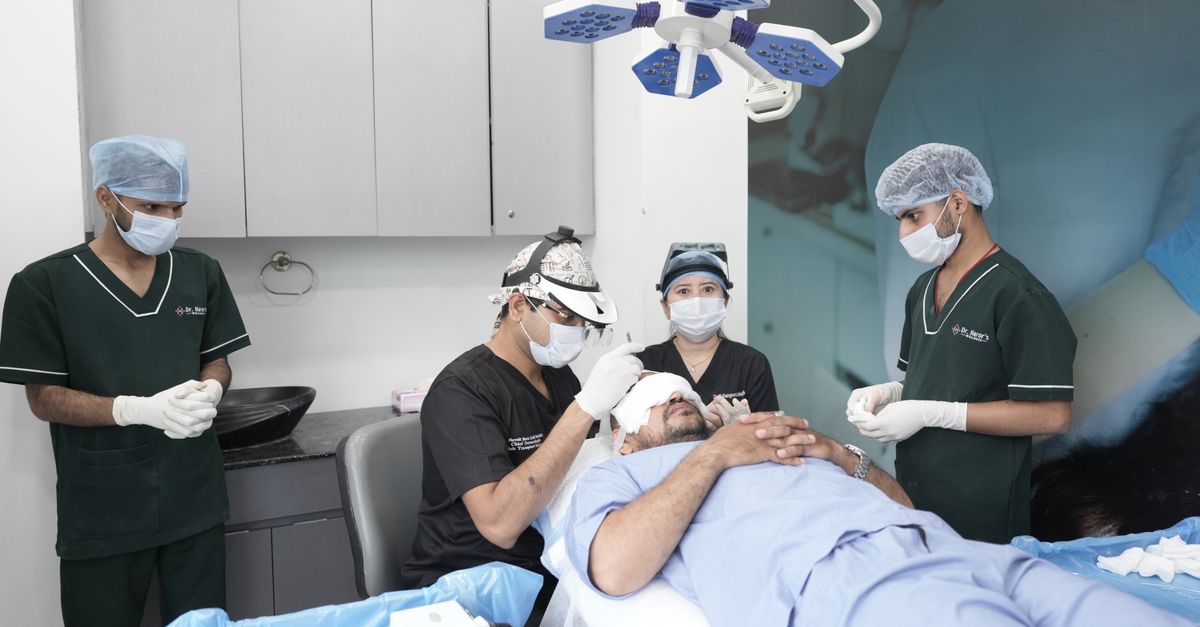
Day 0 (procedure) | FUE, DHI, or Sapphire FUE grafts placed under local anesthesia in a 6–8 hour session | Travel back to the hotel with a soft neck pillow; eat a light meal; start the post-op medication kit | Tightness across the scalp, oozing pinpoints at each graft site, soreness at the donor area |
Day 1 | Grafts begin to anchor; donor-area dot scars start closing | Return to the clinic for the supervised post-op head wash (included at Heva, Esthetic Hair Mexico, others); sleep upright | Swelling beginning at the forehead; mild headache; the donor area feels bruised |
Days 2–3 | Swelling peaks; tiny scabs form over each graft | Sleep upright on a travel pillow; ice the forehead (never the recipient area); start the at-home wash on day 3 with the included foam + lotion | Swelling around the eyes and forehead; brief discomfort during the wash |
Days 4–7 | Swelling resolves; scabs fully formed; donor area closing | Daily gentle wash with the aftercare kit; no scratching, no picking, no hats touching the grafts | Itch building, mild redness, the urge to touch (do not touch) |
Days 8–14 | Small scabs over each graft shed naturally with gentle washing | Continue daily wash; loose hat OK by day 10–14; sleep on side again from day 7–10 with care | Tiny hairs shed with the scabs — this is the cosmetic scab, not the graft |
Days 15–21 | Donor-area scars closed; recipient-area pink fading; first online follow-up | Resume light walking; no gym, no sauna, no swimming pool; keep direct sun off the recipient area | Pink fading to skin tone; donor area itching as it heals |
Days 22–30 | Recipient area looks similar to pre-op; transplanted hairs about to enter shock-loss phase | Return to most normal activity; resume light gym on a doctor's clearance around day 21–28; sunscreen or hat in direct sun for 3 months | Scalp can look the same as the day of surgery — this is normal and expected before the shedding phase |
A few patterns worth naming. Days 0 to 10 do most of the work — the grafts anchor in the first 72 hours and the scabs cycle off by day 14. Days 11 to 21 are when most patients are quietly back in public with a loose hat and a clean wash routine. And days 22 to 30 are the calm before the shedding window in weeks 2 to 6 that almost every patient mistakes for a failed transplant. It is not. Our deeper read on the full 12-month hair transplant timeline covers what happens after day 30 — through the dormant phase, the first growth at month 3 to 4, and the 12-month final density.
How Do I Wash My Hair After a Transplant?
Washing is the single most asked-about part of aftercare — and the single most common place patients get nervous and either skip steps or scrub too hard. Here is the protocol most credentialed clinics use, including the Doctours partner network.
Day 0 (procedure day). No washing. Leave the grafts alone. The clinic sends you back to the hotel with the recipient area open to air and the donor area covered with a small bandage that comes off the next morning.
Day 1 — the clinic-supervised first wash. Most Doctours partner clinics include a post-op head wash the morning after surgery, performed by a member of the surgical team. Heva Clinic builds this into every tier — Silver, Gold, Diamond, VIP, and No Shave FUE. Esthetic Hair Mexico includes it in its Standard package. This is the wash where you learn the exact pressure, the exact angle, and the exact products you will use at home for the next two weeks. Watch carefully — you are about to do it 13 times in a row.
Days 3 through 10 — the at-home wash protocol. Once a day, in this order. Apply the foam (or lotion) from the aftercare kit to the recipient and donor areas. Leave it on for 30 to 45 minutes to soften the scabs. Rinse with lukewarm water poured from a cup or a low, soft-spray showerhead held about 12 inches above the head — never a direct high-pressure stream. Apply a small amount of the included gentle shampoo with the pads of your fingers, dabbing rather than rubbing. Rinse again. Pat — do not rub — with a clean soft towel. The aftercare kit included at Fizyoestet Hair, Esthetic Hair Turkey, MetropolMED (across the Premium, VIP, Elite, and Hybrid tiers), and Vera Clinic packages contains the exact foam, lotion, and shampoo your surgeon picked for this protocol.
Days 11 through 30. Once the scabs have fully shed (usually by day 14), you can return to a normal but gentle wash routine. Lukewarm water, regular shampoo (sulfate-free is kinder), pads of fingers rather than nails. The recipient area is no longer fragile by week three — but it has just been through a procedure, and treating it gently for the rest of the month is the cheapest form of protection you have.
A few things never to do in the first 30 days. No hot water on the recipient area. No high-pressure showerheads. No scratching with fingernails, even when the itch is intense (it gets intense around day 5 to 7 — that is normal). No swimming pools, no saunas, no steam rooms, no ocean. No hair products with alcohol. No hair dye, no styling cream, no leave-in conditioner — just the products the clinic gave you and plain shampoo after week two.

Sleep, Exercise, and Daily Life: What Changes for 30 Days
The wash routine is the part people obsess over. The sleep, exercise, and daily-life rules are the part that actually quietly decides how clean your recovery looks at day 30.
Sleep. Upright at roughly a 45-degree angle for the first seven nights, on a soft travel pillow or two regular pillows wedged behind the lower back, with the back of the head free of contact. This is the single biggest reason swelling stays where it is supposed to stay (the forehead and eyes) instead of pooling around the recipient area. Most patients can move to side sleeping from day 7 to 10, and back-of-head sleeping returns around day 14 once the scabs are gone. You will be uncomfortable around night two and three. You will adapt.
Exercise. Nothing for the first 7 days beyond slow walking around the hotel or the house. Light walking from day 7 to 14. No gym, no running, no cycling, no anything that raises blood pressure or pulls a t-shirt over your head until day 21 at the earliest, ideally day 28 on a doctor's clearance. No contact sports for 30 days. No swimming pools, saunas, hot tubs, or ocean for 30 days — the chlorine, bacteria, and pressure are all problems for closing wounds. The US Centers for Disease Control and Prevention's medical-tourism guidance echoes the conservative recovery window for elective procedures abroad.
Sun, hats, and shaving. No direct sun on the recipient area for the first 30 days; after that, wear a hat or apply a gentle SPF for 3 months. Loose hats OK from day 10 to 14 — anything that does not press on or rub the grafts. Do not shave the recipient area for at least one month. Donor-area trimming is fine after week three with electric clippers on the highest guard.
Alcohol, smoking, and diet. No alcohol for the first 10 days (it thins the blood and worsens swelling), and ideally minimal alcohol through week three. No smoking or vaping for at least the first two weeks — nicotine constricts blood vessels and reduces graft oxygenation. Stay hydrated, eat real protein (the follicles are rebuilding), and keep the rest of your routine boring. The patients who treat the first 30 days like a small, deliberate recovery almost always land cleanly on the standard 12-month growth curve we cover in our patient results photo gallery at 3, 6, and 12 months.
Red Flags to Call Your Care Team About
Most of what feels weird in the first 30 days is normal. Some of it is not. Here is the short list that warrants a same-day call to your care team — at Doctours, that is your US-based coordinator on a 24/7 line by call, text, or video chat, with your case file open in your time zone.
Spreading redness beyond the immediate graft sites, especially with warmth or a raised border, can signal a developing infection. Some pink around each graft is normal in the first week; spreading red is not.
Pus or a foul odor from the recipient or donor area at any point. Tiny clear ooze on day 0 to 1 is normal. Yellow, thick, or smelly discharge is not.
Fever over 100.4°F (38°C), chills, or systemic symptoms in the first 14 days. Hair transplant complication rates at credentialed clinics sit under 1% for infection per the ISHRS — but when fever appears, it gets a call.
Severe pain at the donor area beyond the first week, particularly if it is escalating rather than fading. Donor-area soreness is expected through day 3 to 5 and should improve steadily after.
Sudden swelling that worsens after day 5, especially if asymmetric or accompanied by bruising spreading down the neck. Most swelling resolves by day 7; new swelling after that is worth a call.
Excessive bleeding from any graft site that does not stop with gentle pressure for 10 minutes. Pinpoint oozing on day 0 to 1 is normal; active bleeding past day 2 is not.
Two reassurances. None of these are common — credentialed clinics see them in a small minority of patients, and almost every flag on this list has a straightforward fix when caught early. And every Doctours partner clinic builds 12 months of structured online follow-ups into the package (extended to 36 months at Dr. Serkan Aygin Clinic), with the first scheduled check-in at week one — so a quiet, normal recovery still gets reviewed by your surgical team without you having to flag anything. Our deeper read on hair transplant safety red flags covers the warning signs to spot before you ever fly, and our 12-step travel safety checklist covers the prep side of the same equation.
Does the Hair Transplant Aftercare Plan Change for FUE, DHI, or Sapphire FUE?
A reasonable second question — and the short answer is: the 30-day aftercare plan is essentially the same. FUE, DHI, and Sapphire FUE all extract single follicles and place them as grafts; the wash protocol, the sleep posture, the exercise restrictions, and the red-flag list apply across all three techniques. Our FUE vs DHI comparison walks through how the techniques differ on density and scarring, and our Sapphire FUE breakdown covers when the blade is worth the small premium.
Two small variations are worth naming. DHI's implanter pen tends to leave slightly less inflammation in the first week, which can make day 3 to 5 feel a touch less swollen. And Heva Clinic's $6,000 No Shave FUE tier preserves your existing hair length around the recipient area, which makes the loose-hat window arrive faster — useful for patients who need to be back in front of cameras quickly. Neither changes the 30-day aftercare playbook beneath them.
The Bottom Line
Hair transplant aftercare instructions for the first 30 days are, at heart, a small set of boring protocols held steady through a month that wants to feel dramatic. Day 1 is the clinic-supervised wash. Days 3 through 14 are the at-home wash with the aftercare kit. Sleep upright through week one. No gym for three weeks. No sun on the recipient area. Watch the short red-flag list. Call your care team if anything looks like it landed on it. Almost nothing will.
That is the real work this guide is built to save you — the 2 a.m. panic on day three, the swelling spiral on day five, the certainty that the procedure failed on day twenty-eight. None of it is failure. It is the plan. Through Doctours, the structure underneath the plan is already in place. Vetted partner clinics from $2,200 in Turkey through $7,000 at US-based partners. Three Republic of Turkey Ministry of Health-accredited clinics in the network — Heva Clinic, MetropolMED, and Vialife Clinic. Post-op head washes, aftercare kits, and 7 days of post-op medication baked into the package. A US-based care team on a 24/7 line through the full 30 days and beyond. 12 to 36 months of online follow-ups already scheduled. Deposits from $300. Payment plans up to 36 months in USD. The plan is built. Your job, for the 30 days between the procedure and the start of the shedding phase, is to follow it.
You have already done the hard part. You chose yourself, you flew, you sat in the chair, and you came home. The month in front of you is the easiest part of the whole decision — quiet, small, mostly boring days that hand you the result you flew for. You have earned every one of them.
Want to start with a clinic where the first 30 days of aftercare are already built into the package? A free assessment matches you with vetted clinics, flat-rate USD pricing, and a US-based care team that walks every day of recovery with you — no pressure, no commitment.

FAQs
When can I wash my hair after a hair transplant?
The first wash is done at the clinic the morning after surgery on day 1, supervised by the surgical team — every Heva Clinic tier and Esthetic Hair Mexico's Standard package include this post-op head wash. From day 3 onward, you wash once a day at home using the foam, lotion, and gentle shampoo from the included aftercare kit: apply the foam for 30 to 45 minutes to soften the scabs, rinse with low-pressure lukewarm water poured from a cup, and pat dry with a clean soft towel. By day 14 the scabs have shed and you can return to a normal but gentle wash routine for the rest of the 30-day window.
How long do I need to sleep upright after a hair transplant?
Sleep upright at roughly a 45-degree angle on a travel pillow for the first seven nights to keep swelling on the forehead instead of pooling around the recipient area. Most patients can return to side sleeping from day 7 to 10, and back-of-head sleeping returns around day 14 once the scabs have fully shed. The first two nights are the most uncomfortable, but the discipline in week one is the single biggest reason swelling stays controlled.
When can I go back to the gym after a hair transplant?
No exercise beyond slow walking for the first 7 days, light walking from day 7 to 14, and no gym, running, cycling, sauna, swimming pool, or contact sports until day 21 at the earliest — ideally day 28 on a doctor's clearance. Anything that raises blood pressure or pulls a shirt over your head in the first three weeks risks dislodging grafts or worsening swelling, and chlorinated or ocean water is a problem for the still-closing wounds in the donor area.
Is shedding normal in the first month after a hair transplant?
Yes. Two kinds of shedding are normal in the first 30 days. First, tiny hairs come away with the small scabs around day 10 to 14 as the scabs cycle off — those hairs are the cosmetic delivery vehicle, not the implanted graft. Second, transplanted hairs begin a wider shed in weeks 2 to 6 as the follicles enter the telogen rest phase shocked by the procedure. The follicles themselves stay alive under the scalp and re-enter active growth around month 3 to 4, with the full result landing at month 12.
What hair transplant aftercare red flags should I call my care team about?
Call your care team the same day for any of the following: spreading redness beyond the immediate graft sites (especially with warmth or a raised border), pus or a foul odor from the recipient or donor area, fever over 100.4°F or chills, severe donor-area pain that is escalating beyond the first week, sudden swelling that worsens after day 5, or active bleeding that does not stop with 10 minutes of gentle pressure. Hair transplant complication rates at credentialed clinics sit under 1 percent for infection per the International Society of Hair Restoration Surgery, but every Doctours patient gets a US-based coordinator reachable 24/7 by call, text, or video chat the entire month so flagged signs get addressed the same day.