




Overview
Hair transplant discretion is the #1 reason patients choose to travel abroad for their procedure.
Recovery involves visible redness, scabbing, and swelling that can last two to three weeks — hard to hide at home.
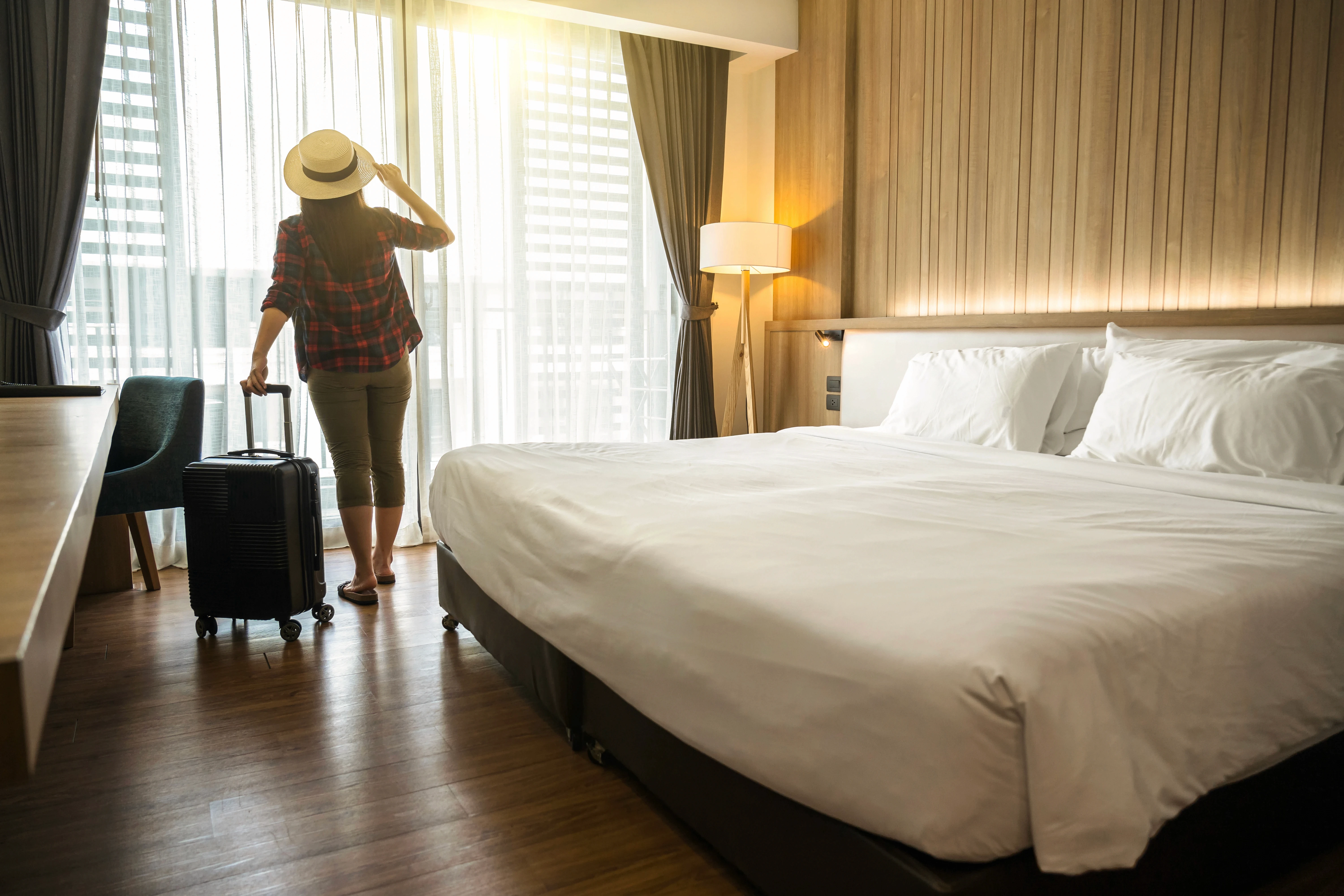
Getting a hair transplant abroad lets you recover privately in a hotel room, away from coworkers, family, and questions.
Medical travel doubles as a vacation, giving you a built-in reason for your time away and dedicated space to heal.
You decide who knows — traveling for a hair transplant puts you in control of your own privacy.
You've probably thought about getting a hair transplant more than once. Maybe you've researched clinics, looked at before-and-after photos, even priced out the procedure. But something keeps holding you back — and it might not be the cost or the surgery itself.
It might be the idea of people knowing.
Hair loss is incredibly common. So is wanting to do something about it. But for many people, the thought of walking into work with a visibly healing scalp — or fielding questions from family members — feels like too much. The procedure itself isn't the problem. It's everything that comes after.
That's why more people are choosing to travel abroad for hair restoration. Not just for the price or the quality of care, but for something harder to put a number on: discretion. The ability to take care of yourself without announcing it to everyone in your life.
Here's what you should know.
Why Does Hair Restoration Still Feel Like It Needs To Be a Secret?
Hair loss is one of those conditions that's everywhere and nowhere at the same time. Millions of people experience it. But when it comes to actually treating it, things get quieter.
Part of this is cultural. For a long time, hair restoration carried a stigma — think bad toupees and obvious plugs from decades past. Even though today's procedures look natural and are backed by real science, the old associations linger. There's a sense that you're supposed to just accept hair loss, not fight it. And if you do fight it, you're not supposed to talk about it.
Then there's the other layer: the idea that cosmetic procedures are somehow vain or superficial. People treat conditions that affect how they feel about themselves all the time — but hair restoration still gets put in a different category.
The result? Many people feel too embarrassed to discuss hair transplants openly, even when they're seriously considering one. It becomes a private decision that stays private, sometimes out of preference, sometimes out of self-protection.
And honestly? That's okay. How you choose to take care of your health — and who you share it with — is entirely up to you.
What Does Hair Transplant Recovery Actually Look Like?
Here's the thing about hair transplants: the procedure itself is only part of the equation. Recovery is where discretion gets tricky.
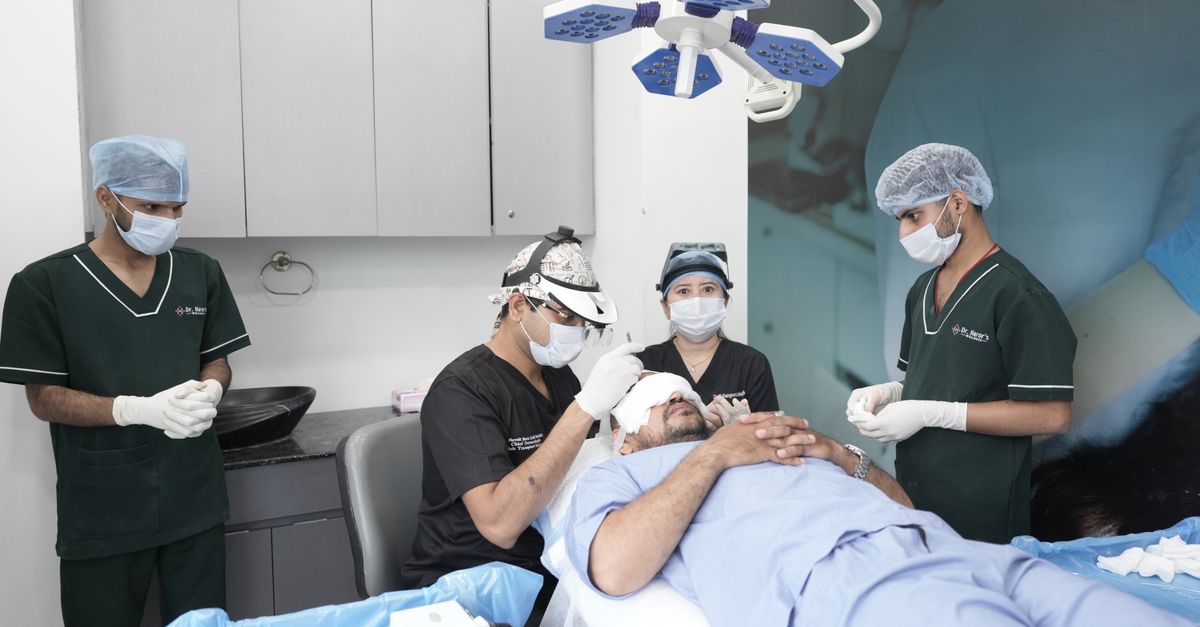
In the first few days after a hair transplant, the recipient area (where the new grafts were placed) will likely show redness, swelling, and tiny scabs around each graft. Your forehead might swell. If you had an FUE procedure, the donor area at the back of your head may be shaved short, with small dot scars visible while it heals.
Put simply, you won't look like yourself for a little while.
Most of the obvious signs — the redness, the scabbing — start to fade within the first one to two weeks. But "fading" doesn't mean invisible. Depending on your skin tone, your healing rate, and how your body responds, you might still look noticeably "off" for three weeks or more.
That's a long time to avoid your coworkers. Or your in-laws. Or that neighbor who always wants to chat.
This is the practical problem with getting a hair transplant close to home: unless you have a remote job and a very understanding household, you'll probably have to face people while you're still healing. And that means either explaining yourself — or hoping no one asks.

Why Do Some People Keep Their Procedure Private — Even From Family?
Not everyone wants to announce their hair transplant. And the reasons are more varied than you might think.
For some people, it's about professional image. Maybe you work in an industry where appearance matters, or you're in a client-facing role where showing up with an obviously healing scalp could raise eyebrows. Some workplaces are supportive of cosmetic procedures. Others... aren't. And not everyone wants to find out which category theirs falls into.
For others, it's more personal. Maybe you'd rather just show up with results than walk everyone through the process. Maybe your family has opinions about cosmetic procedures that you'd rather not debate. Maybe you just don't want the attention — the questions, the comments, the unsolicited advice.
None of this is about shame. It's about control. You're allowed to decide when and how you share things about your body. A hair transplant is a personal decision, and keeping it private doesn't mean you're hiding something. It means you're handling it on your own terms.
The challenge is that handling it on your own terms is a lot easier when you're not trying to hide your healing scalp from people you see every day.

How Does Traveling Abroad Solve the Discretion Problem?
This is where medical travel starts to make a lot of sense.
When you travel abroad for a hair transplant, you're not just accessing quality care from a dedicated care team (often at a lower price than domestic clinics). You're also buying yourself something valuable: space.
You get to recover from the comfort and privacy of a hotel room, far away from the people in your daily life. No stuffy waiting rooms filled with familiar faces. No running into a colleague at the pharmacy. No explaining the bandage on your head to your neighbor while you're taking out the trash.
Instead, you're somewhere else entirely — somewhere no one knows you, and no one is watching.
By the time you come home, the most visible signs of your procedure have faded. The redness has calmed down. The scabs are gone. You look like yourself again, just... better. And unless you choose to share what you did, no one has to know.
There's also a practical bonus: the trip itself gives you a built-in explanation for your time away. You were traveling. You took a vacation. You needed a break. All of these are true — and none of them require mentioning a clinic.
For a lot of people, this combination of privacy and plausible deniability makes all the difference. You get the procedure you want, the recovery time you need, and the discretion you deserve.
And if you happen to enjoy a few nice dinners or see some sights while you're healing? Even better. You've earned it.
The Bottom Line
Hair loss is a common condition. Wanting to do something about it is just as common. But the decision to get a hair transplant is personal — and so is the decision about who you share it with.
Traveling abroad for your procedure gives you more than access to experienced surgeons and competitive pricing. It gives you the space to recover on your own terms, away from prying eyes and well-meaning questions. You come back looking like yourself, feeling like yourself — without having to explain anything to anyone.
Taking the shame out of seeking treatment starts with giving yourself permission to do it privately. And sometimes, the best way to do that is a plane ticket.
FAQs
How long does it take to look "normal" after a hair transplant?
Most people see the obvious signs of their procedure — redness, scabbing, swelling — fade significantly within one to two weeks. However, full healing can take longer depending on your skin type and how your body responds. Many people feel comfortable returning to normal social situations around the three-week mark
What do I tell people about why I'm traveling?
That's entirely up to you. Many people simply say they're taking a vacation or a personal trip. Because medical travel often takes you to destinations with plenty to see and do, it's easy to frame your time away as a well-deserved break — which, honestly, it is.
Can I travel alone for a hair transplant abroad?
Yes. Many people travel solo for their procedure. Reputable clinics that work with international patients typically offer support services, including airport transfers, translation assistance, and post-operative check-ins. That said, some people prefer to bring a travel companion for moral support — the choice is yours.
Will anyone be able to tell I had a procedure once I'm healed?
Modern hair transplant techniques, like FUE, are designed to look natural. Once you're fully healed and the transplanted hair has grown in (usually around 9-12 months for final results), the goal is that no one can tell — unless you tell them.
Is it safe to fly after a hair transplant?
Most surgeons recommend waiting at least a few days before flying after your procedure to allow initial healing and reduce the risk of swelling. Many medical travel packages include several days of post-operative recovery time before your return flight. Your care team will give you specific guidance based on your procedure.