


Overview
An ISHRS member surgeon in Turkey is a licensed physician who belongs to the International Society of Hair Restoration Surgery — a non-profit founded in 1993 with members in more than 70 countries — and has agreed to a peer code of ethics and ongoing education in this one field.
Membership is a meaningful surgeon-level signal, not a guarantee: it is not the same as board certification, and the badge only counts once you have confirmed the named operating surgeon's national medical license directly with the issuing authority.
ISHRS has publicly campaigned against unlicensed technicians performing hair transplant surgery, which is exactly the 'who actually holds the scalpel' question that matters most when you book a clinic in Turkey.
In Turkey the credentials that do the heavy lifting are the surgeon's license from the Türk Tabipleri Birliği and the clinic's International Health Tourism Authorization Certificate from the Ministry of Health — held by Doctours partners Heva Clinic, MetropolMED, and Vialife Clinic.
Doctours verifies every operating surgeon's credentials through a five-stage review across 13 vetted clinics in Turkey, Mexico, Poland, and the United States, with flat-rate USD packages from $2,200 to $7,000, deposits from $300, and 12 to 36 months of US-based aftercare.
An ISHRS member surgeon in Turkey is a hair restoration doctor who belongs to the International Society of Hair Restoration Surgery — the largest non-profit medical association devoted solely to hair restoration, founded in 1993 with members in more than 70 countries. Membership signals that a licensed physician has chosen to be accountable to a global community of peers, follow the society's code of ethics, and keep current with continuing education in this one narrow field. That matters in Turkey, where most of the world's hair transplants happen and where the surgeon's name on your paperwork is the single most important thing to verify. Hair transplants through Doctours' vetted Turkey partners start around $2,200, and every operating surgeon's credentials are confirmed before you ever sit down for a consultation.
You have probably been at this a while. Comparing clinics late at night, screenshotting before-and-after galleries, and trying to figure out whether the friendly face in the consultation chat is actually the person who will be doing your surgery. Somewhere in the research you came across “ISHRS member” and wondered if it was a real credential or just another logo on the footer. Is this the thing that finally tells me who to trust? It is a fair question — and you deserve a straight answer instead of a sales pitch.
So let's look at it honestly. What ISHRS membership actually means. What it does not prove. How to check it yourself in a few minutes. And how the way Doctours audits surgeons abroad treats affiliations like this one — as a useful signal, never the whole story. By the end you will know exactly which credential does the real work, and you will be able to spot it without a single guess.
What Is an ISHRS Member Surgeon?
The International Society of Hair Restoration Surgery is a global, non-profit medical society dedicated entirely to hair loss and hair restoration. It was founded in 1993, represents members in more than 70 countries, and publishes the field's continuing-education programming, an annual scientific meeting, and a written code of ethics that members agree to uphold. An ISHRS member surgeon, then, is a physician who has joined that community and committed to its standards rather than working in isolation. Put simply, the society exists so that hair restoration doctors are answerable to one another, not just to their own marketing.
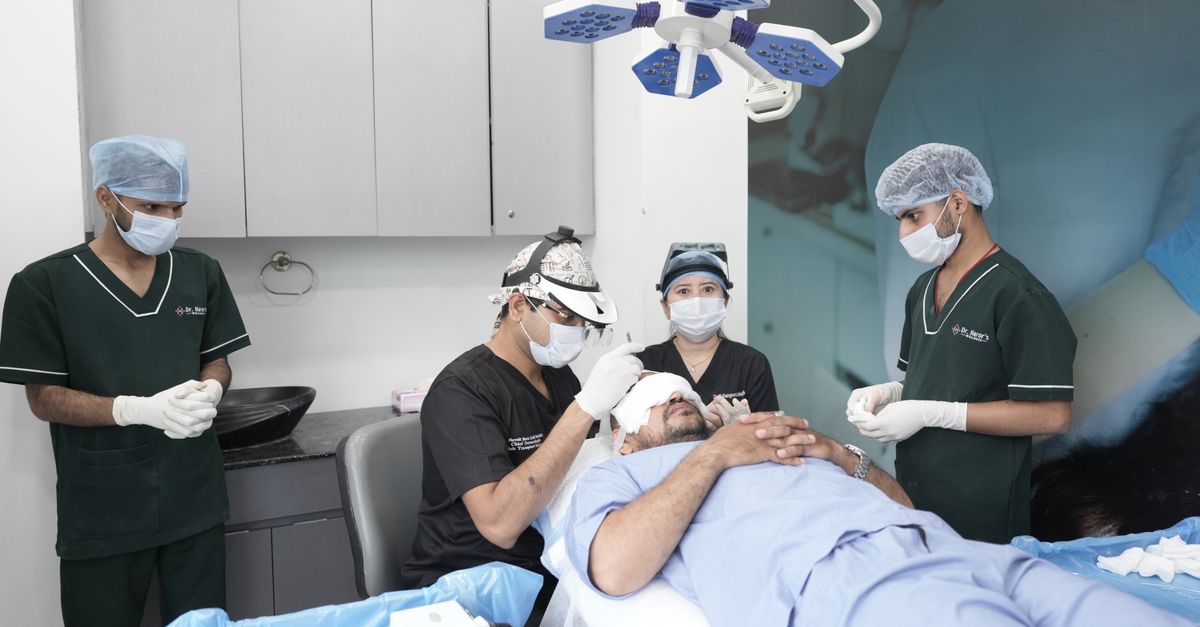
Here's the part that matters for someone flying in from the US. The ISHRS has spent years publicly warning patients about a real problem in this industry: unlicensed technicians performing the surgery while a doctor's name sits on the website. The society has campaigned directly against that practice, because the value of the whole field depends on a qualified physician actually being responsible for your procedure. So when a surgeon chooses to be an ISHRS member, they are aligning themselves with the group that has been loudest about the exact thing you are worried about — who is really holding the instruments while I am in the chair? That is peer accountability you can feel.

Does ISHRS Membership Mean a Surgeon Is Board-Certified?
No — and this is where honesty matters more than reassurance. ISHRS membership is a professional affiliation, not a board certification. The closest hair-restoration-specific board credential is the American Board of Hair Restoration Surgery (ABHRS), a separate exam-based certification that a minority of surgeons worldwide hold. ISHRS membership tells you a surgeon is engaged with the field and bound by a code of ethics; it does not, by itself, prove surgical volume, complication rates, or that the named doctor performs the critical steps. Both things can be true at once: an ISHRS affiliation is a genuine green flag, and it is still not the credential that legally lets someone operate.
That credential is the surgeon's medical license. In Turkey, every operating physician must be registered with the Türk Tabipleri Birliği (the Turkish Medical Association), and the clinic itself should hold the Republic of Turkey Ministry of Health's International Health Tourism Authorization Certificate. The CDC's medical tourism guidance makes the same point from the patient's side: verify the individual provider's qualifications and the facility's accreditation, and do not rely on a single logo. A membership badge is a starting line. A verified license is the finish line.
ISHRS Membership vs. Other Hair Transplant Credentials
It helps to see the credentials side by side, because each one answers a different question — and the most impressive-sounding name is not always the one that protects you. Here is what each signal actually proves, and where it fits when you are choosing a clinic in Turkey.
Credential | Issued By | What It Signals | What It Does Not Prove | Relevance in Turkey |
|---|---|---|---|---|
ISHRS Membership | International Society of Hair Restoration Surgery | Engagement with the field, continuing education, a peer code of ethics | Not a board exam; not proof of who performs each surgical step | A strong surgeon-level green flag to look for and verify |
ABHRS Certification | American Board of Hair Restoration Surgery | Passed a hair-restoration-specific examination | Held by a minority of surgeons worldwide; not legally required | An additional, rarer signal of focused expertise |
National Medical License | Türk Tabipleri Birliği (Turkey) | Legal authority to practice medicine and operate | Not procedure-specific on its own | The single most important check — verifiable directly with the authority |
Int'l Health Tourism Authorization | Republic of Turkey Ministry of Health | Facility cleared an on-site inspection for international patients | A clinic-level stamp, not a surgeon-level one | The core clinic credential; held by Heva Clinic, MetropolMED, and Vialife Clinic |
JCI / TEMOS Accreditation | Joint Commission International / Temos (Germany) | Hospital-grade operations or international-patient quality | Built for large facilities, not single-procedure clinics | Uncommon for dedicated hair clinics — rarely the deciding factor |
Reading across the rows, the pattern is clear: ISHRS membership and ABHRS certification speak to the surgeon, while the Ministry of Health authorization speaks to the building, and JCI or TEMOS were built for hospitals. Our guide to what hair transplant accreditation standards really mean walks the full alphabet of stamps, and our breakdown of TEMOS versus JCI covers the facility side in depth. The takeaway is the same either way — layer the signals, and never let one badge stand in for all of them.

How Do You Verify an ISHRS Member Surgeon in Turkey?
A membership claim is only worth as much as your ability to trace it. The good news is that this takes minutes, not hours, and the order matters more than any single step. Here is the sequence we use, and the one you can run yourself before you wire a single deposit:
Get the named operating surgeon's full legal name. Not the clinic's brand, not the consultant you chatted with — the physician who will perform your procedure.
Search the ISHRS member directory. The society publishes a find-a-doctor tool; confirm the surgeon appears there rather than trusting a logo on the clinic's homepage.
Verify the surgeon's Turkish medical license. Confirm registration with the Türk Tabipleri Birliği, the national authority — this is the check that legally matters.
Confirm the clinic's Ministry of Health authorization. Check the International Health Tourism Authorization Certificate against the Ministry's own list, not a brochure.
Ask who performs each step. A clear answer on whether the surgeon does the incisions and design — versus technicians — is exactly the transparency ISHRS itself advocates for.
If a clinic gets cagey at step one, that tells you something on its own. Surgeon-led clinics answer these questions without flinching, while the high-volume operations we describe in our hair mill warning signs guide tend to hide the surgeon behind the brand. Our patient-facing clinic vetting checklist puts every one of these signals in order.
How Doctours Checks Surgeon Credentials Before You Meet Them
Here's the thing: you should not have to become a credentials investigator just to take care of yourself. So we do that part for you. Every clinic in the Doctours network clears a five-stage review — desk credentialing, independent audits, an in-person inspection on operating days, a patient-outcome review, and ongoing monitoring — and a surgeon's affiliations are treated as one input among many. We confirm each operating surgeon's national license directly with the issuing authority, note procedure-specific signals like ISHRS membership where a surgeon holds them, and verify the clinic's facility authorization on the Ministry of Health register rather than its PDF.
That work spans 13 vetted clinics across Turkey, Mexico, Poland, and the United States. In Turkey alone, Doctours partners include Heva Clinic and MetropolMED — both carrying the Ministry of Health authorization and TÜRSAB certification — alongside the doctor-led Dr. Serkan Aygin Clinic. A clinic that cannot prove a credential on the issuer's own record is treated exactly like a clinic with none. If you want the short list of options already cleared for American patients, our roundup of Turkey clinics for US patients is the place to start.
The Bottom Line
An ISHRS member surgeon in Turkey is a real, encouraging signal — it means a licensed physician has chosen to be accountable to peers and to keep learning in the one field that is about to change how you see yourself in the mirror. But a membership badge is the beginning of the conversation, not the end of it. The credential that legally lets someone operate is a verified national medical license, and the question that protects you most is the simplest one: who actually performs my surgery? Ask it out loud, and trace every answer to its source.
You have already done more homework than most people ever will. You do not also have to carry the burden of verifying every license and stamp alone. That is the work behind every Doctours partner — surgeon licenses confirmed at the national authority, facility credentials checked on the issuing register, an in-person visit on operating days, and 12 to 36 months of US-based aftercare built into every booking. Thirteen partner clinics have cleared every stage, with flat-rate USD packages from $2,200 to $7,000 and deposits from $300 listed on the current pricing page.
You waited long enough to do this on your own terms. When you are ready, the hardest part of the vetting is already done.

FAQs
What is an ISHRS member surgeon?
An ISHRS member surgeon is a licensed physician who belongs to the International Society of Hair Restoration Surgery, a non-profit founded in 1993 with members in more than 70 countries. Membership means the surgeon has agreed to the society's code of ethics and ongoing continuing education in hair restoration, but it is a professional affiliation rather than a board certification or medical license.
Is an ISHRS member surgeon better than a non-member?
ISHRS membership is a genuine green flag because it shows engagement with the field and a commitment to peer accountability, but it does not by itself prove surgical volume or that the named doctor performs each step. The credential that legally matters most is a verified national medical license, so treat membership as one signal to confirm alongside the license, not as a substitute for it.
How do I check if a hair transplant surgeon in Turkey is an ISHRS member?
Get the named operating surgeon's full legal name and search the ISHRS find-a-doctor directory on ishrs.org rather than trusting a logo on the clinic's website. Then verify that surgeon's license with the Türk Tabipleri Birliği and confirm the clinic's Ministry of Health authorization on the Ministry's own list before paying any deposit.
Does ISHRS membership mean the surgeon does the surgery themselves?
Not automatically — membership signals alignment with the society's ethics, and the ISHRS has publicly campaigned against unlicensed technicians performing surgery, but you should still ask directly who performs the incisions and hairline design. A transparent, surgeon-led clinic will answer that question clearly, which is exactly the accountability ISHRS advocates for.
Do Doctours partner clinics in Turkey use ISHRS member surgeons?
Doctours verifies every operating surgeon's national medical license and the clinic's Ministry of Health authorization, and notes procedure-specific signals like ISHRS membership where a surgeon holds them, rather than relying on any single badge. Turkey partners such as Heva Clinic, MetropolMED, and the Dr. Serkan Aygin Clinic clear a five-stage Doctours review covering credentialing, audits, in-person inspection, outcomes, and ongoing monitoring.