


Overview
The first wash after a hair transplant is usually done on day 3, and it matters because the grafts have not yet anchored — a soak-and-rinse method, never scrubbing or high pressure, is what protects the 95 to 98 percent graft survival credentialed FUE clinics report.
Through Doctours you never do this wash blind: partner clinics across Turkey, Mexico, Poland, and the US include a clinic-supervised day-1 head wash and an aftercare kit, and a US-based care team walks you through the day-3 at-home wash by video call.
The day-3 protocol is five gentle steps — apply the foam or lotion, let it soak 30 to 45 minutes to soften the crusts, rinse with low-pressure lukewarm water poured from a cup, dab the shampoo in with your fingertips, and pat dry with a clean towel.
The Post-Op Head Wash is built into every Heva Clinic tier and Esthetic Hair Mexico's Standard package, and Online Follow-Ups are included across nearly every Doctours partner clinic — so the wash you watched at the clinic is the same one your care team reviews on camera at home.
Doctours coordinates vetted clinics from $2,200 in Turkey through $7,000 at US-based partners, with deposits from $300 and payment plans up to 36 months, and the first-wash guidance is one piece of a recovery plan that runs 12 to 36 months.
The first wash after a hair transplant is usually done on day 3, and it is the moment that protects everything you just paid and traveled for. In those first days the new grafts sit in tiny channels and have not fully anchored, so the wash is deliberately gentle — a long soak to soften the crusts, then low-pressure lukewarm water poured from a cup, never scrubbing, never a hard shower stream. Done correctly, it protects the 95 to 98 percent graft survival the International Society of Hair Restoration Surgery reports for FUE at credentialed clinics. Through Doctours, you never do this wash blind: partner clinics from $2,200 in Turkey through $7,000 at US-based partners include a clinic-supervised first head wash and an aftercare kit, and a US-based care team walks you through the day-3 at-home wash by video call.
Here is where most people are when they read this. It is day two or three. The surgery went fine. You are back at the hotel — or already home — and there is a small, quiet panic building around one ordinary act: I have to put water on my head, and I am terrified I am going to wreck it. Every graft feels like it cost a hundred dollars, because in a way it did. And the instinct that has kept your hair clean your whole life — scrub, lather, rinse hard — is suddenly the exact thing you cannot do.
Fair concern. This guide is the calm version of that day: what the first wash is, when it happens, the exact step-by-step surgeons use, and what to leave completely alone. None of it is complicated. It just has to be gentle — and it helps to have someone on the other end of a screen the first time you do it.
Why Does the First Wash After a Hair Transplant Matter So Much?
The grafts placed during your procedure sit in micro-channels and anchor into the scalp over the first several days. In that window, small crusts form around each one — a normal part of healing. The first wash does two jobs at once: it keeps the recipient area clean so bacteria and dried blood do not build up, and it slowly softens those crusts so they shed on their own by day 10 to 14 instead of being picked or scrubbed off. Get the pressure and timing right and you protect the graft survival that credentialed FUE clinics report. Get impatient — a hot shower aimed straight at your head, a fingernail working at a crust — and you risk dislodging a graft before it has secured.
That is the whole reason the protocol looks so cautious. It is not fragility for its own sake — it is a short, defined window where gentle beats thorough every single time. Post-transplant guidance in the StatPearls hair transplantation review makes the same point: the recipient area needs protection and clean, careful washing while the grafts take, not aggression. Our fuller 30-day aftercare instructions map the whole month; this article zooms all the way in on the single wash that starts it.
When Is the First Wash — Day 1, Day 3, or Later?
There are really two "first washes," and knowing which is which removes most of the confusion.
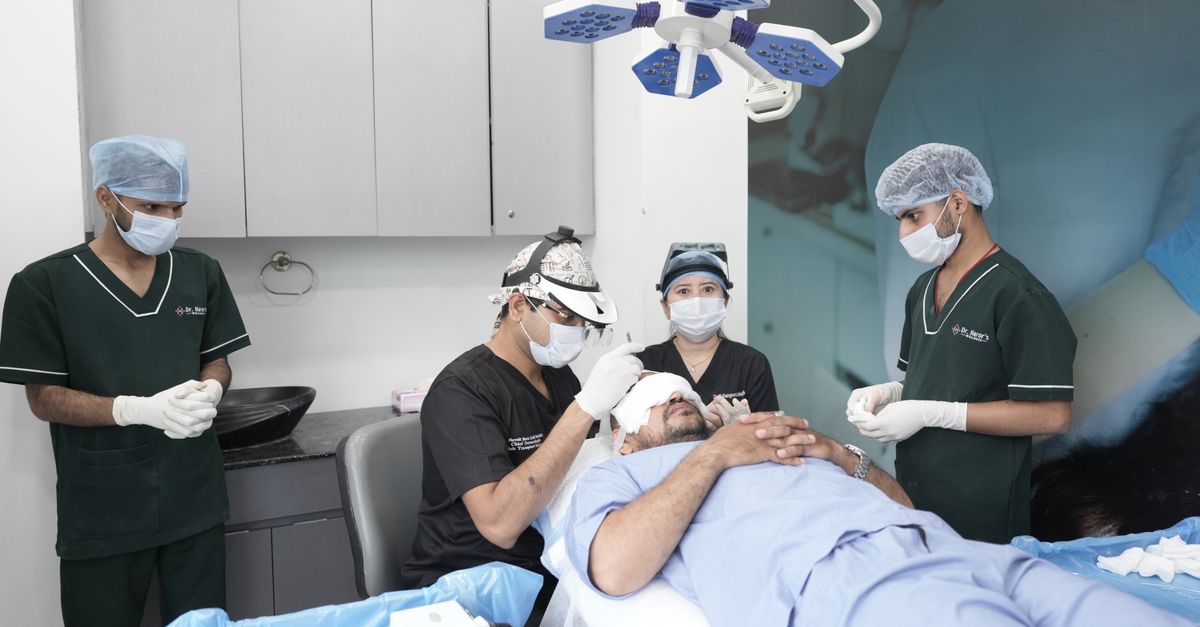
Day 1 — the clinic-supervised wash. The morning after surgery, most quality clinics do a first head wash for you, performed by the surgical team. This is where you watch the exact pressure, angle, and products you will use at home. Every tier at Heva Clinic — Silver, Gold, Diamond, VIP, and No Shave FUE — builds this Post-Op Head Wash into the package, and Esthetic Hair Mexico includes it in its Standard package. Watch it closely. You are about to repeat it every day for two weeks.
Day 3 — the first at-home wash. This is the one people mean when they say "the first wash," because it is the first one you do yourself. Most surgeons schedule it 48 to 72 hours after surgery, using the foam, lotion, and gentle shampoo from your aftercare kit. From there it becomes a once-a-day routine until the crusts have fully shed. Doctours partner packages include the aftercare kit that makes it possible at clinics like Fizyoestet Hair, MetropolMED, and Vialife Clinic — the exact foam, lotion, and shampoo your surgeon chose, not a guess off a pharmacy shelf.

The Day-3 First Wash Protocol Surgeons Use, Step by Step
Here is the exact sequence most credentialed clinics — and every Doctours partner — teach for the day-3 wash. Once a day, unhurried, in this order.
Apply the foam or lotion. Cover the recipient and donor areas with the foam or lotion from your aftercare kit. Do not rub it in — just lay it on.
Let it soak 30 to 45 minutes. This is the step people rush and regret. The soak softens the crusts so they release on their own later, instead of clinging to a graft.
Rinse with low-pressure lukewarm water. Pour water from a cup, or use a low, soft spray held about 12 inches above your head. Never a direct high-pressure stream, never hot water.
Dab in the gentle shampoo with your fingertips. A small amount, worked in with the pads of your fingers — patting, not scrubbing. No fingernails, ever.
Rinse again and pat dry. Rinse the same gentle way, then pat — do not rub — with a clean, soft towel, and let the rest air-dry.
Repeat that once a day. By day 10 to 14 the crusts have shed on their own and you can move back to a normal but gentle routine. The single most common mistake is treating day three like a regular shower — the second most common is skipping washes out of fear, which lets crusts harden and trap oil. Steady and gentle is the whole game.
What Not to Do During Your First Wash
The "do nots" matter as much as the steps. For roughly the first two weeks after a hair transplant:
No direct high-pressure water on the recipient area — cup-poured or soft-spray only.
No hot water on the grafts. Lukewarm keeps swelling and irritation down.
No fingernails, no scratching, no picking at crusts, however tempting the itch gets around day 5 to 7.
No rubbing with a towel — pat and air-dry.
No regular shampoo, conditioner, dye, or styling product until the crusts have shed and your surgeon clears it — just the kit products.
No swimming pools, saunas, steam rooms, or ocean while the wounds are still closing.
Recovering abroad adds one more layer: you are doing this in a hotel bathroom, sometimes in a country where you do not speak the language. That is exactly the recovery window the US Centers for Disease Control and Prevention's medical-tourism guidance flags as needing a clear aftercare plan before you fly — not something to improvise at the sink. It is also why the technique behind the wash barely changes between methods; our FUE vs DHI comparison covers the small differences, but the day-3 protocol above holds for FUE, DHI, and Sapphire FUE alike.

What If I'm Washing Alone at Home?
This is the real fear underneath the whole question. The clinic did the first wash for me — but what happens when I'm home, alone, and it's suddenly my hands on my own head? It is a fair worry, and it is the exact gap Doctours is built to close. Doctours pairs every patient with a US-based care team you can reach 24/7 by call, text, or video chat. When day three comes, you do not open a leaflet and hope — you get on a video call and do the wash with someone watching, correcting the pressure and the angle in real time, in your own time zone.
That support is not a one-off, either. Online Follow-Ups are included across nearly every Doctours partner clinic — American Mane, Art Line Clinic, Dr. Hakan Clinic, Dr. Serkan Aygin Clinic, Esthetic Hair Mexico, Esthetic Hair Miami, Fizyoestet Hair, Heva Clinic, MetropolMED, and Vialife Clinic — so the check-ins keep going through the crust-shedding window and into the growth months. The Doctours care team is the difference between recovering alone and recovering supervised.
What's Included for the First Wash at Doctours Partner Clinics?
Different packages itemize the first-wash pieces differently. Here is a grounded look at what a few Doctours partners list, so you can confirm the inclusions on your clinic's page before you book.
Clinic (Location) | Day-1 Post-Op Head Wash | Aftercare Kit | Online Follow-Ups |
|---|---|---|---|
Heva Clinic (Turkey) | Included, all tiers | Included | Included |
Esthetic Hair Mexico (Mexico) | Included | — | Included |
MetropolMED (Turkey) | — | Included | Included |
Fizyoestet Hair (Turkey) | — | Included | Included |
Vialife Clinic (Turkey) | — | Included | Included |
A dash does not mean a clinic skips the wash — most perform a supervised day-1 head wash as standard practice. It means the package does not list it as a separate line item, so it is worth confirming. What the table really shows is the pattern: the aftercare kit and online follow-ups run right across the Doctours network, so wherever you go, you get the products and the video-call support that make the day-3 wash safe.
The Bottom Line
The first wash is not the dramatic, high-stakes ordeal it feels like at 8 a.m. on day three. It is five gentle, boring steps — soak, rinse soft, dab, rinse again, pat dry — held steady once a day until the crusts let go on their own. Do it gently and you protect the graft survival that credentialed clinics report per the ISHRS. Rush it and you fight your own result. Gentle wins.
And you do not have to get it right alone. Through Doctours, the structure is already there: vetted partner clinics from $2,200 in Turkey through $7,000 at US-based partners, a clinic-supervised day-1 wash and an aftercare kit built into the package, and a US-based care team that gets on a video call and does the day-3 wash with you. Deposits from $300. Payment plans up to 36 months in USD. Online follow-ups running 12 to 36 months. When you come out the far side of the crust window and the shedding phase, our read on the month-by-month growth timeline shows what you are actually walking toward.
You already did the hard part. You chose yourself, you sat in the chair, you came home. The next few weeks ask almost nothing of you — just a gentle wash and a little patience. You have earned an easy recovery, and this is the plan that gives you one.
Nervous about doing the first wash on your own? A free assessment matches you with vetted clinics, flat-rate USD pricing, and a US-based care team that walks the day-3 wash with you on camera — no pressure, no commitment.

FAQs
When is the first wash after a hair transplant?
The first at-home wash is usually done on day 3, roughly 48 to 72 hours after surgery. Most quality clinics also perform a supervised head wash on day 1, the morning after the procedure, so you can watch the exact technique before repeating it yourself. From day 3 you wash gently once a day until the crusts shed on their own by day 10 to 14.
How do I wash my hair for the first time after a hair transplant?
Apply the foam or lotion from your aftercare kit to the recipient and donor areas and let it soak for 30 to 45 minutes to soften the crusts. Rinse with low-pressure lukewarm water poured from a cup, dab in a small amount of gentle shampoo with your fingertips (never fingernails or scrubbing), then rinse again and pat dry with a clean soft towel. Repeat once a day until the crusts have fully shed.
Can I ruin my hair transplant by washing it wrong?
You can dislodge a graft if you scrub, pick at crusts with fingernails, or aim a hot, high-pressure stream at the recipient area in the first days before the grafts have anchored. The gentle soak-and-rinse protocol exists precisely to prevent that, and done correctly it protects the 95 to 98 percent graft survival credentialed FUE clinics report. When in doubt, do the wash slower and softer, not harder.
What water pressure and temperature should I use for the first wash?
Use lukewarm water at low pressure — poured from a cup or delivered by a soft spray held about 12 inches above your head. Never use hot water or a direct high-pressure shower stream on the recipient area for roughly the first two weeks, because both can dislodge grafts or worsen swelling while the scalp is still healing.
Does Doctours help with the first wash if I'm recovering at home?
Yes. Doctours partner clinics include a supervised day-1 head wash and an aftercare kit, and Doctours pairs every patient with a US-based care team that walks you through the day-3 at-home wash by video call. That team is reachable 24/7 by call, text, or video chat, and online follow-ups are included across nearly every partner clinic through the full recovery window.