



Overview
Hair transplant anesthesia safety comes down to two things — a clinic that uses local anesthesia rather than general, and a documented dosing plan that tracks the total numbing agent used across a six-to-eight-hour session.
A hair transplant is performed awake, under local anesthesia across the scalp, with optional light IV sedation — it never requires the general anesthesia that carries the highest surgical risk.
The one anesthesia risk worth taking seriously is lidocaine overdose, which is why the safe maximum dose is weight-based and a good clinic tracks every milligram it injects.
Doctours audits the anesthesia and sedation protocol at every partner clinic before booking a traveler — who administers it, how it is dosed, and what the emergency plan is.
All-in packages through Doctours start around $2,200 in Turkey and $2,500 in Mexico, with anesthesia, monitoring, and 24/7 US-based aftercare included rather than billed as an upsell.
Hair transplant anesthesia safety depends on two things: a clinic that keeps you awake under local anesthesia instead of putting you under, and a written dosing plan that tracks how much numbing medication goes into your scalp across a long session. Done right, it is one of the lower-risk parts of the whole procedure — a hair transplant uses the same family of local anesthetic as a dental filling, not the general anesthesia that carries the real surgical danger. Every clinic in the Doctours network runs local anesthesia with monitored, weight-based dosing, and we review that protocol in person before we send anyone. All-in packages start around $2,200 in Turkey and $2,500 in Mexico, with the anesthesia and monitoring included, not billed later.
You've probably read enough to know a hair transplant takes six, seven, sometimes eight hours. And somewhere in that reading, a quieter thought showed up: that's a long time to have someone injecting things into my head in a country I've never been to.
That's a fair thing to sit with. Anesthesia is the part of any surgery that feels the least in your control — you're trusting a stranger to dose you correctly and watch you while you can't fully watch yourself. Doing that abroad adds a layer. So let's not wave it away. Let's walk through exactly what happens, what actually carries risk, and the specific questions that separate a clinic you can trust from one you should skip.
What Kind of Anesthesia Is Used for a Hair Transplant?
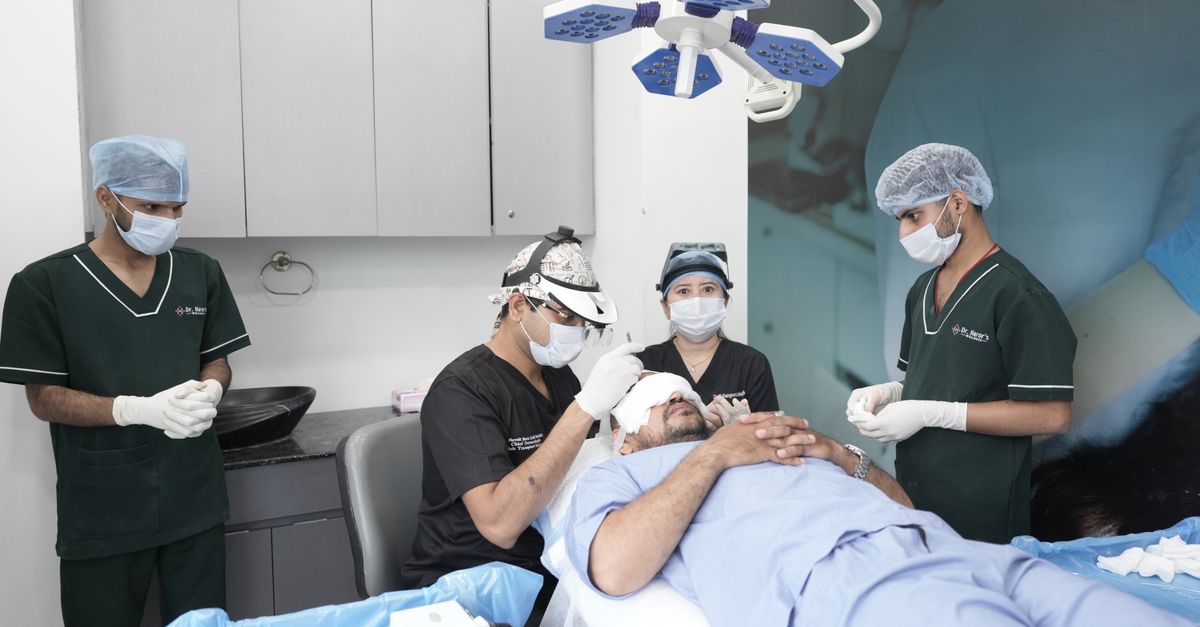
A hair transplant is performed under local anesthesia — a series of numbing injections across the donor and recipient areas of the scalp — usually lidocaine, often combined with epinephrine to limit bleeding. You stay awake the entire time. You breathe on your own, you keep all your reflexes, and most people spend the session listening to music, scrolling their phone, or napping in the chair. Some clinics add light IV sedation to take the edge off, especially during the first round of injections. What no reputable clinic uses is general anesthesia, because the procedure simply doesn't need it.
That distinction matters more than almost anything else in this conversation. General anesthesia — the kind that puts you fully unconscious on a ventilator — is where the serious anesthesia complications live. According to the CDC's medical tourism guidance, the highest anesthesia risk in surgery abroad comes from general anesthesia and the monitoring it demands. A hair transplant skips that category entirely. Here's how the three setups compare:
Anesthesia Type | Used in Hair Transplant? | You Are | Relative Risk |
|---|---|---|---|
Local anesthesia | Yes — the standard | Fully awake, numb scalp | Low |
Local + light IV sedation | Sometimes, optional | Awake but relaxed, drowsy | Low to moderate |
General anesthesia | No — not appropriate | Fully unconscious | Highest |
Put simply, a hair transplant is an awake, local-anesthesia procedure. If a clinic ever proposes general anesthesia for a routine FUE or DHI case, treat that as a red flag and ask why — the same way we walk patients through anesthesia questions in our guide to whether a hair transplant in Mexico is safe.

What Actually Makes Hair Transplant Anesthesia Risky?
Here's the honest answer most clinics won't lead with: the real anesthesia risk in a hair transplant isn't being "put under." It's dose. Local anesthetic is safe within limits and dangerous past them, and a hair transplant is long enough that a careless clinic can drift past the limit without noticing.
Lidocaine has a weight-based ceiling — roughly 4.5 mg per kilogram on its own, and about 7 mg per kilogram when combined with epinephrine. A large recipient area plus a wide donor zone, numbed and topped up repeatedly over eight hours, adds up. When the cumulative dose crosses that ceiling, a patient can develop local anesthetic systemic toxicity — ringing ears, a metallic taste, dizziness, and, in rare severe cases, seizures or heart rhythm problems. This is the anesthesia complication that actually shows up in hair transplants, and it is almost entirely preventable. A clinic prevents it by dosing to your body weight, tracking the total milligrams injected across the day, spacing top-ups, and keeping lipid emulsion and resuscitation equipment on hand. That is what a real dosing plan is.
The other risk is quieter and more common: a vasovagal reaction — a sudden drop in heart rate and blood pressure that can make you feel faint, usually during the first round of injections. It's rarely dangerous when someone is watching for it. The danger is when no one is. That's why continuous monitoring of your pulse, blood pressure, and oxygen isn't a luxury during a hair transplant — it's the baseline.
What Questions Should You Ask a Clinic About Anesthesia Safety?
You don't need a medical degree to vet a clinic's anesthesia setup. You need the right questions and the confidence to walk away if the answers are vague. Before you book anywhere — inside or outside our network — ask these:
Who administers and monitors my anesthesia? A physician or trained specialist should dose and watch it — not whoever is free.
How is my dose calculated? The answer should reference your body weight and a tracked daily maximum, not "however much we need."
Am I monitored the whole time? Continuous pulse, blood pressure, and oxygen — not a spot check.
What happens if I have a reaction? They should name a protocol: lipid emulsion on hand, emergency equipment, and the nearest hospital.
Will you use anything beyond local anesthesia? If IV sedation is added, ask who supervises it.
A clinic that answers these plainly is telling you it has thought about the thing that scares you. A clinic that gets defensive is telling you something too. Doctours asks every one of these questions during our in-person audit — the same 30-point review we describe in how we vet a clinic before you book abroad — and we bring the list to you so you can ask them yourself. If you want the full pre-booking script, our rundown of questions to ask any clinic before booking covers anesthesia alongside credentials and pricing.

How Does Doctours Audit Anesthesia and Sedation Protocols?
Credentials on a website are a starting point. What happens in the room is what matters. That's why Doctours audits the anesthesia and sedation protocol at every partner clinic in person — before a single traveler is booked, and on an ongoing basis after.
When a Doctours team member visits a clinic, the anesthesia review is part of the checklist, not an afterthought. We confirm who administers and monitors sedation, we review how doses are recorded and weight-adjusted, and we check that the sedation records show tracked totals rather than guesswork. We look at the monitoring equipment, the emergency oxygen, and the documented plan for a reaction. And because every clinic we work with runs a large volume of these procedures — MetropolMED carries a 4.8 rating across 29 reviews, Dr. Serkan Aygin Clinic a 4.6 across 40, and Heva Clinic a 4.3 across 69 — the anesthesia routine is practiced, not improvised. Several of our Turkish partners, including Heva, MetropolMED, and Vialife, also hold an International Health Tourism Authorization Certificate from the Republic of Turkey Ministry of Health, which regulates facility and patient-safety standards for foreign patients.
The review doesn't end at the clinic door. This is the same in-person standard we apply to the whole facility in medical tourism quality assurance, and it pairs with the pre-op tests a clinic should run beforehand — blood work and a medication review that flag anything that would change how you should be dosed. If anything looks off on the day, or in the weeks after, your Doctours care team is US-based and reachable 24/7 by call, text, or video. That's the same safety net we describe in our broader guide to what actually goes wrong abroad — and why it so rarely does when the clinic is the right one.
The Bottom Line
Hair transplant anesthesia safety isn't the mystery it feels like at midnight. The procedure keeps you awake under local anesthesia, skips the general anesthesia that carries the real risk, and comes down to one thing you can actually check: whether the clinic doses carefully and watches you the whole time. Ask who administers it, how it's calculated, and what the plan is if something feels off. A good clinic will have crisp answers ready.
Through Doctours, that review is already done for you — the anesthesia protocol, the sedation records, the monitoring, the emergency plan — all confirmed in person before you're booked, and all included in one all-in price that starts around $2,200. You brought the caution most people skip. That's not fear talking. That's you taking your own safety seriously, which is exactly the person who does this right.
You've waited long enough to feel like yourself again. When you're ready, you get to move forward knowing the hardest questions were already asked — and answered.

FAQs
Is hair transplant anesthesia safe?
Yes, when it's done under local anesthesia with careful, weight-based dosing and continuous monitoring. A hair transplant keeps you awake and never requires general anesthesia, which is the setup that carries the highest surgical risk. The main preventable risk is lidocaine overdose, which a good clinic avoids by tracking the total dose across the session.
What type of anesthesia is used for a hair transplant?
Hair transplants use local anesthesia — numbing injections across the scalp, usually lidocaine with epinephrine — and sometimes light IV sedation to help you relax. You stay awake and breathe on your own the entire time. General anesthesia is not used for a standard FUE or DHI procedure.
What questions should I ask a clinic about anesthesia safety?
Ask who administers and monitors your anesthesia, how the dose is calculated against your body weight, whether you're monitored continuously, and what the emergency plan is if you have a reaction. Also ask whether anything beyond local anesthesia will be used. Doctours asks these during its in-person audit and shares the list with you.
Can you have a bad reaction to local anesthesia during a hair transplant?
It's rare but possible. The main concern is local anesthetic systemic toxicity from too much lidocaine over a long session, with early signs like ringing ears or dizziness. A weight-based dosing plan, tracked totals, and continuous monitoring make it highly preventable, which is why they are non-negotiable at a safe clinic.
Does Doctours check anesthesia protocols at its partner clinics?
Yes. Doctours audits the anesthesia and sedation protocol at every partner clinic in person before booking a traveler, confirming who administers it, how doses are recorded and weight-adjusted, the monitoring setup, and the emergency plan. A US-based care team is then available 24/7 throughout your trip and recovery.