




Overview
Hair transplant Germany cost runs roughly €4,000 to €10,000 in 2026 — about $4,300 to $10,900 in USD — for 2,500 to 4,000 grafts, which puts Berlin and Munich at or above the top of European pricing.
Per-graft FUE in Germany typically prices at €3.00 to €5.00, among the highest bands in Europe, because German labor, facility, and regulatory-compliance costs sit above almost every other EU country.
Germany is not a current Doctours partner destination; the closest vetted EU option is Klinika Borejsza in Ruda Śląska, Poland, at €5,500 (about $5,950) flat-rate for up to 3,500 grafts — often several thousand euros below a Berlin or Munich quote, with in-person vetting and US-based aftercare attached.
German clinics operate under the EU Cross-Border Healthcare Directive, GDPR-level records protection, and surgeon licensing through the regional Landesärztekammer under the Bundesärztekammer (German Medical Association), which is the EU regulatory floor rather than a premium feature.
Across a vetted network in five countries, Doctours quotes flat-rate USD packages from $2,200 to $7,000, with deposits from $300, payment plans up to 36 months, and 12 to 36 months of US-based aftercare on a 24/7 line.
Hair transplant Germany cost runs roughly €4,000 to €10,000 — about $4,300 to $10,900 in USD — for 2,500 to 4,000 grafts in 2026, with Berlin and Munich clinics anchoring the top of that range. That puts Germany at the ceiling of European pricing, often two to four times what the same FUE procedure costs in Turkey. Through Doctours, Germany is not a current partner destination; the closest vetted EU option is Klinika Borejsza in Ruda Śląska, Poland — a €5,500 (about $5,950) flat-rate package for up to 3,500 grafts that usually lands several thousand euros below a Berlin or Munich quote, with the same EU regulatory floor and a US-based care team attached.
If a German clinic has been sitting in your open tabs, the price is rarely the only thing keeping you there. Istanbul feels far. Tijuana feels unfamiliar. You want somewhere that feels like a German hospital — precise, regulated, unhurried — and you are willing to pay for that peace of mind. That is a fair instinct, and Germany delivers on it. What it does not deliver is a bargain. Munich and Berlin give you some of the strictest medical oversight on the continent and clinic infrastructure that mirrors a high-end US specialist visit — at a number that sits at or above every other EU destination.
Here is the honest breakdown. This guide compares 2026 hair transplant pricing in Germany — Berlin and Munich specifically — against the wider European market and the vetted network alternatives, using widely-reported market ranges plus the verified Doctours partner price. Every number is in euros with a USD conversion, and every claim about what Doctours bundles is grounded in a published partner-clinic package.
How Much Does a Hair Transplant in Germany Cost in 2026?
Hair transplant cost in Germany sits at the EU ceiling — €4,000 to €10,000 for 2,500 to 4,000 grafts, with per-graft FUE pricing of roughly €3.00 to €5.00, among the highest bands in the European Union. Munich generally prices a touch above Berlin, and both run higher than Madrid or Barcelona. Here is how the German market compares to the rest of Europe and the vetted alternatives.
Location | Typical Package Price (2026) | USD Equivalent | Common Grafts | What Patients Get |
|---|---|---|---|---|
Munich / Berlin (Germany) | €5,000 – €10,000 | ~$5,400 – $10,900 | 2,500 – 4,000 | EU ceiling, strict oversight, premium infrastructure |
Poland (Doctours partner: Klinika Borejsza) | €5,500 flat-rate | ~$5,950 | Up to 3,500 | Vetted EU clinic, FUE + PRP + transport bundled |
Spain (Madrid, Barcelona) | €4,000 – €8,000 | ~$4,300 – $8,700 | 2,500 – 4,000 | EU premium tier, US-style clinic experience |
Turkey (Doctours network) | $2,200 – $6,000 | $2,200 – $6,000 | 3,000 – 4,500 | Highest surgeon volume, lowest all-in price |
Two caveats on those German numbers. First, they are headline ranges — what a clinic publishes before add-ons. The honest all-in figure after sedation, post-op meds, hotel nights, and transfers can run another 10% to 25% higher at clinics that quote per-graft rather than bundle. Second, EU prices are sticky: German labor and clinic overhead do not move fast, so the 2026 range is close to 2025's and likely close to 2027's. For the full continental picture, our country-by-country European price guide sets Germany against Poland, Spain, Hungary, and Portugal.
Why Is a Hair Transplant in Germany So Expensive?
Three things push German prices to the top of the European table. First, labor and facility costs in Berlin and Munich are among the highest in the EU, and the per-graft number carries that overhead directly. Second, Germany applies unusually strict medical oversight — surgeons are licensed through the regional Landesärztekammer under the Bundesärztekammer (German Medical Association), and the compliance, documentation, and facility standards behind that licensing cost money that lands in the quote. Third, German clinics tend to bill more like a Western hospital than a package tour, with itemized surgeon, anesthesia, and facility fees rather than one bundled number.
So you pay a real premium — but a premium for oversight, not automatically for a better result. Compare that to Turkey, where a full FUE procedure costs $1,500 to $4,000 because the economics, not the quality, are different. One honest trade-off worth naming: surgeon volume in Germany is far lower than in Istanbul — a Munich specialist might run a few hundred cases a year where an Istanbul surgeon runs thousands — and the International Society of Hair Restoration Surgery rates surgeon volume as the strongest predictor of consistent results. Most expensive is not automatically safest. The mistake is paying the German premium and then skipping the same vetting you would do anywhere else.
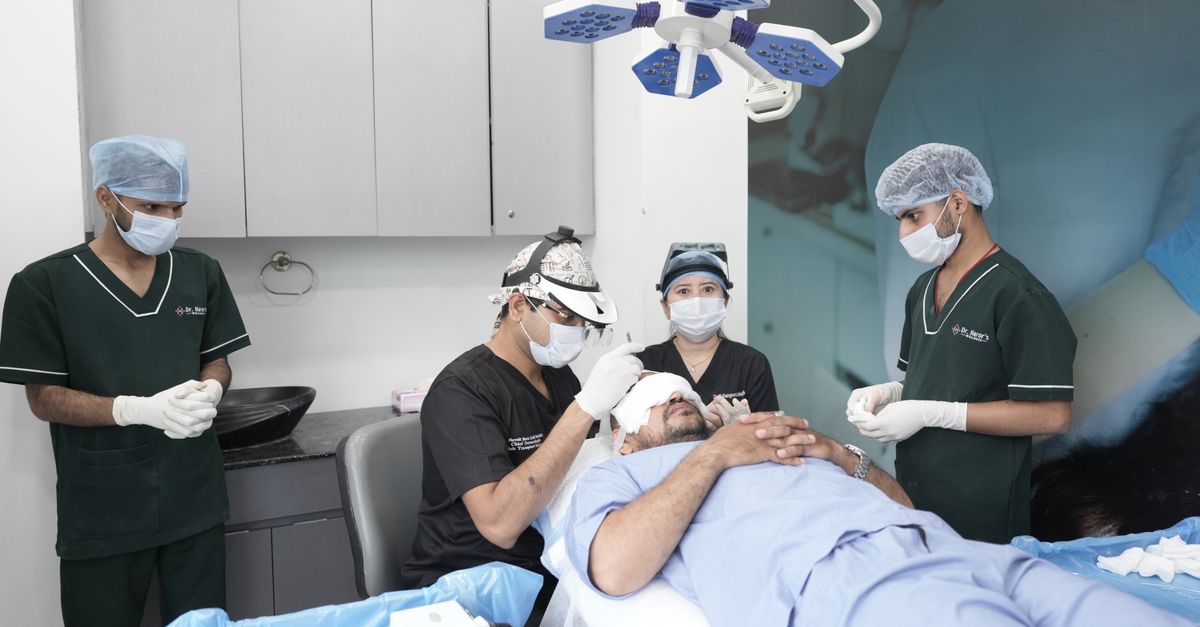
What Is Actually Included in a German Hair Transplant Quote?
This is where most cost spreadsheets go sideways. The headline number is one thing. What sits underneath is the budget that actually leaves your account. German clinics tend to itemize rather than bundle, so it pays to know which line items are in and which arrive later.
Usually included in a Berlin or Munich quote: the FUE or DHI procedure, local anesthesia, the surgeon's time, a basic post-op kit, and the first follow-up appointment.
Often charged separately: hotel nights (typically €130 to €250 per night in Berlin or Munich, among the higher rates in the EU), IV sedation if you want it over local-only, premium techniques like sapphire FUE or DHI implanters, extended aftercare visits, and currency-conversion margin on any wire transfer. Our breakdown of medical tourism hidden costs walks through the full list of fees that turn a €6,000 quote into a €7,500 final invoice. When you build a real budget, the true cost of surgery abroad is always more than the package line.
Here is what is structurally different through Doctours. Every package is quoted flat-rate in US dollars, the deposit is in USD, the inclusions are published on the clinic page before the deposit clears, and Doctours is free for patients — partner clinics pay Doctours for the coordination, so the price you see is the price you pay. Deposits start at $300, payment plans run up to 36 months, and your US-based care team stays on a 24/7 line through the full recovery window.
Berlin vs Munich: Does the City Change the Price?
Not by much. Berlin and Munich both sit at the top of the German range — €5,000 to €10,000 for 2,500 to 4,000 grafts — with Munich usually pricing a few hundred euros higher as one of the most expensive cities in Germany. What changes between them is the experience around the procedure, not the surgery itself. Berlin skews toward larger, internationally-oriented clinics with English-language consultations as a norm; Munich leans toward a quieter, more traditional clinical setting.
Both cities give you the same practical advantages: direct or one-stop flights from most US East Coast hubs in 8 to 10 hours, English-language care, and the EU regulatory floor underneath every licensed clinic. If you are choosing between them, choose on recovery comfort and the surgeon's individual casebook — not on a price gap that barely exists. The surgeon's track record matters far more than the postal code, which is the same lesson behind our Turkey-vs-Mexico comparison. And if a German quote climbs past €8,000, it is worth pressure-testing against Spain's Madrid and Barcelona pricing and the vetted Poland option before you commit.

Is There a Lower-Cost EU Alternative to Germany?
Yes — and this is the honest part. Doctours does not currently run a partner clinic in Berlin, Munich, or anywhere else in Germany. Our only vetted European clinic is Klinika Borejsza in Ruda Śląska, Poland, led by head surgeon Dr. Maciej Borejsza. Its Standard package is €5,500 (about $5,950) for up to 3,500 grafts, with the FUE procedure, PRP therapy, and full-service transportation bundled into one flat-rate quote and a €500 deposit holding the date.
For a US patient who wants EU regulation without the German premium, that math is worth a hard look. Klinika Borejsza typically sits several thousand euros below a Berlin or Munich package, and it carries the exact same EU protections — the EU Cross-Border Healthcare Directive 2011/24/EU for patient rights, GDPR for your medical records, and national medical-chamber licensing for the surgeon. Germany did not invent those protections alone, but its data-privacy tradition helped shape GDPR, and Poland operates under the identical framework. Poland delivers the regulated-EU experience that draws people to Germany in the first place, at a lower number and with a Doctours care team attached. If you want the broader shortlist, our best hair transplant clinics in Europe guide weighs Germany against the vetted options. And if price is the deciding factor and EU regulation is not, our network's Turkey clinics run from $2,200 to $6,000, while the Mexico pricing breakdown covers the West Coast option.
How Do You Vet a German Hair Transplant Clinic Before You Book?
If you do choose Germany directly, vet it the same way you would vet a clinic anywhere — the high price only stays a good deal if the surgeon behind it checks out. A short, non-negotiable list:
Confirm the surgeon is licensed through the regional Landesärztekammer under the Bundesärztekammer, and that a named surgeon — not just a technician — performs the extraction and implantation.
Ask for case photos at 12 months, not day 180, so you see settled density rather than a fresh result.
Get the quote itemized so sedation, hotel, and aftercare show up as separate lines instead of surprises at checkout.
Read the contract for what happens if a complication appears after you fly home — who you call, and who pays.
Those four checks separate a genuine German-quality result from an expensive quote that still leaves you on your own afterward. Our guide to hair transplant safety abroad walks through every red flag worth spotting, and our 2026 destination comparison weighs Germany against Turkey, Mexico, and the rest of Europe on price, surgeon skill, and travel ease.
That vetting is the work Doctours does on your behalf inside the network: surgeon credentials independently verified, packages published flat-rate in USD, and US-based aftercare baked into every booking. Germany stays on the patient-direct side of the table for now — but the standard you should hold a Berlin or Munich clinic to is the same standard our partners already clear.
The Bottom Line
A hair transplant in Germany costs €4,000 to €10,000 in 2026, and for the right person that premium buys something real: a polished, tightly-regulated clinic experience in Berlin or Munich, strict medical oversight, and the comfort of German healthcare standards. That is a defensible reason to pay more. It is also a number worth pressure-testing before you commit, because the same EU regulatory floor exists in Poland for several thousand euros less.
That is the work this guide is built to save you. Whether you land on Germany, Poland, Turkey, or Mexico, the question is never just the headline price — it is who vetted the surgeon, what the all-in number really is, and who picks up the phone when you are home and worried. Through Doctours, that part is already handled across a vetted network in five countries, with flat-rate USD pricing and a care team that stays with you through month twelve.
You have been carrying this decision for a while. The flights to Berlin, Munich, or any major hub are bookable today. The plan, whenever you are ready, is already in place.
Want to find out what your procedure would actually cost — in Germany or a lower-priced EU alternative? A free assessment matches you with vetted clinics and flat-rate USD pricing, no pressure and no commitment.

FAQs
How much does a hair transplant cost in Germany in 2026?
Hair transplant cost in Germany runs roughly €4,000 to €10,000 — about $4,300 to $10,900 in USD — for 2,500 to 4,000 grafts in 2026, with per-graft FUE pricing of €3.00 to €5.00. Berlin and Munich anchor the top of that range, and Germany sits at or above the EU ceiling on price, often two to four times what the same procedure costs in Turkey.
Is a hair transplant cheaper in Berlin or Munich?
Berlin and Munich price within a few hundred euros of each other, both at the top of the German range at €5,000 to €10,000 for 2,500 to 4,000 grafts, with Munich usually a touch higher as one of the most expensive cities in Germany. The difference is the experience, not the price — Berlin skews toward larger internationally-oriented clinics, while Munich leans toward a quieter, more traditional setting. Choose on surgeon casebook and recovery comfort rather than a price gap that barely exists.
Does Doctours have a hair transplant clinic in Germany?
No. Doctours does not currently run a partner clinic in Berlin, Munich, or anywhere else in Germany. Our only vetted European clinic is Klinika Borejsza in Ruda Śląska, Poland, at €5,500 (about $5,950) flat-rate for up to 3,500 grafts — usually several thousand euros below a German quote, with in-person vetting, the same EU regulatory protections, and a US-based care team attached.
Why is a hair transplant in Germany so expensive?
Germany is expensive because labor and clinic-infrastructure costs in Berlin and Munich are among the highest in the EU, German medical oversight is unusually strict, and clinics tend to itemize surgeon, anesthesia, and facility fees rather than bundle one package price. Surgeons are licensed through the regional Landesärztekammer under the Bundesärztekammer, so the premium reflects tighter regulation and higher overhead, not automatically a better result than a well-vetted clinic elsewhere.
What does EU regulation guarantee a hair transplant patient in Germany?
EU regulation gives a hair transplant patient in Germany three things by default: baseline patient rights under the EU Cross-Border Healthcare Directive 2011/24/EU, including informed consent and records access; GDPR-level protection on every medical record the clinic holds; and surgeon licensing through the regional Landesärztekammer under the Bundesärztekammer (German Medical Association), with credentials verifiable. These are the EU floor, not premium add-ons.